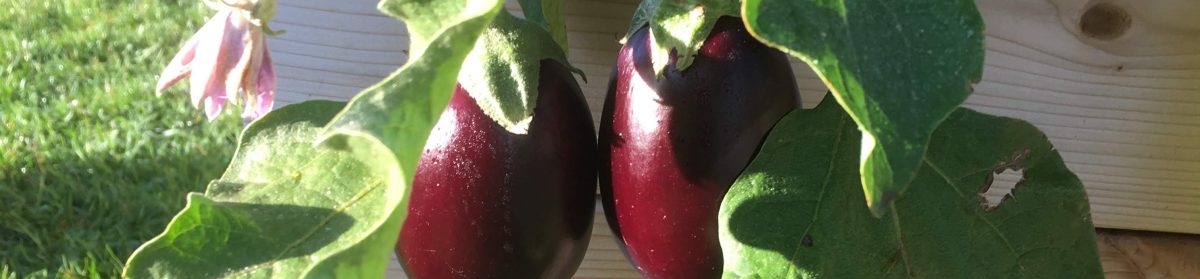
Here is a guide to a few of the vegetable plants that grow well in an indoor garden.
Peas
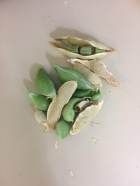
Peas like it a bit cool, so try to keep them in a part of the garden that doesn’t get hotter than 20 degrees Celsius. We direct sow peas because they have sensitive roots that don’t like to be disturbed. I like to plant snap peas in our garden because you can eat the entire pod. Though these varieties don’t need a trellis, if they are near one the plants will curl their tendrils around the trellis. If you regularly harvest your peas, they will produce more pods.
Snap peas mature in about 70 days and grow to approximately 60 cm. They do not like soggy soil, so water them gently.
Tomatoes
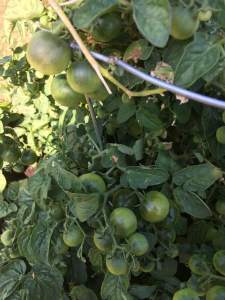
There are two types of tomatoes, indeterminate and determinate. Determinate tomatoes are often called “patio tomatoes” because they grow to a set size which makes them good for indoor gardens. You won’t need to prune determinate tomatoes the way you would the outdoor garden varieties. Tomatoes can be susceptible to blossom end rot. Adding calcium (such as dolomite lime) to the soil will help prevent this.
In my classroom garden I grow Tiny Tim Tomatoes which grow to around 40 cm in height. The plant reaches maturity in about 60 days. The fruit can be picked from the stem when it is ripe and the plant will continue to produce fruit. My students love to pick the ripe tomatoes and eat them straight from the garden!
Peppers
Peppers are slow maturing plants and when grown indoors will likely produce smaller fruit. In order to produce fruit, try to keep them at temperatures above 18 degrees Celsius when flowers are appearing – they like it hot. When your peppers are big enough to be used, you can either clip them from the plant, or twist them off at their stems. If you leave the green peppers on the plant, they will ripen to yellow, red, or orange.
In my classroom garden, the peppers grow to about 60 cm tall. The plant reaches maturity around 65 days. The peppers are about 5 cm long and we usually leave them on the vine until they turn red.
Cucumbers
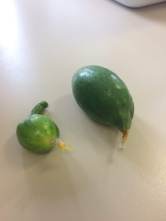
Cucumbers are good container plants because their root system is very shallow. We start cucumbers in peat pellets and plant two seeds in each pellet, thinning to only transplant the strongest seedling. The plants will have male and female flowers and will require pollination by hand. Cucumbers grow on a vine which can either trail on the soil or be trained to climb a trellis.
In my classroom, the cucumbers reach maturity between 50 and 55 days. Mature fruit is about 10 cm long and can be harvested when it reaches that length. About a month before you are closing your classroom garden, pinch off the blossoms from your cucumber so that the remaining fruit will mature.
Beans
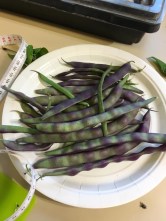
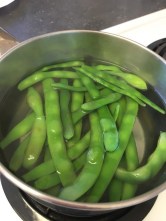
In my classroom, I have grown both bush beans and pole beans. There are benefits to both. Bush beans are more compact – they only grow to about 45 cm tall and like the name says, they are bushy and don’t require trellises. Pole beans need trellises to climb and will grow as tall as there is space. We have had them grow right to our ceiling in our classroom which is about 3.5 metres high. We start beans in peat pellets so that we can use the new plants for lessons on root structures, but they can be sown directly in your garden boxes. You don’t want your beans crowded, so you’ll have to thin the plants so there is more air circulation around the plants. We always leave a few pods on the plants to dry so we can save the seeds to the next growing season.
Beans will mature between 50 and 70 days, depending on the variety. When your pods look full it is time to harvest. Don’t wait until you see the shape of the beans inside. If you harvest regularly, the plants will produce more pods. Once they start coming in, it sometimes feels like we are picking pods for weeks.
Lettuce
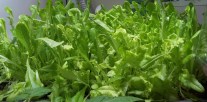
For indoor gardens, loose leaf lettuce is a better choice than head lettuce. Lettuce prefers cooler temperatures, so have them near the garden light but not overly close. If the soil gets too dry the leaves will become bitter tasting.
Lettuce will mature in about 40-50 days. You can harvest frequently by pinching or cutting leaves, leaving the roots and continuing to water. If you do this you’ll get another crop of lettuce in about 8 weeks.
Kale
Kale is becoming a go-to crop in our garden. It’s a very versatile vegetable, which can be eaten raw in salads, steamed, or even made into kale chips! It’s a very hardy crop that likes to be on the cool side.
Kale matures in 55-65 days. Like lettuce, you can cut the leaves and keep the roots intact to grow more kale. If you want to use the kale in soups or other cooking, you can freeze the leaves in airtight freezer bags.
Nasturtiums
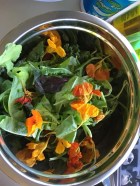
Nasturtiums are an edible flower. They add a splash of colour to our classroom garden and to our salads! Students start out being puzzled when I say they can eat the flowers and most of them say that they don’t want to, but when we make a salad, they all ask if they can have a nasturtium in theirs! Nasturtiums have a hard seed which germinates best if you rub it with a bit of sandpaper so that water can better penetrate the seed coat.
The plants should bloom in about 7-12 days and you can pick the flowers once they open. The entire nasturtium plant is edible from the blossoms and leaves down to the stems and seed pods! They look pretty in a salad and they add a peppery flavour.
 Teaching From the Garden