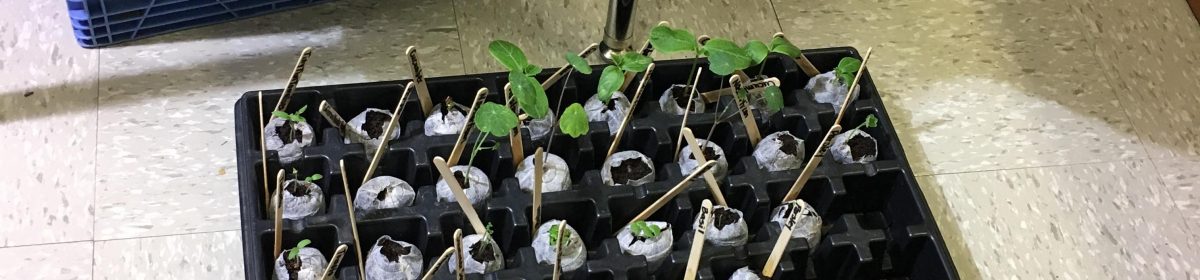
When your seedlings have their first true leaves – these are the leaves above the initial emergent leaves – you have a choice to make. You can continue to grow your plants in the peat pellet trays or you can transplant to small pots.
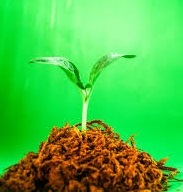
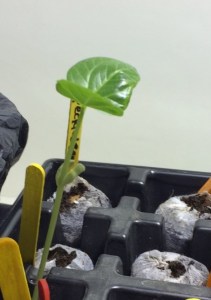
If you choose to continue the seedlings in the peat pellet trays, be aware that they will dry out more quickly. You will need to be diligent about checking on them. If you decide to transplant to small pots you can use 10cm plastic pots or you can make newspaper pots with students using this lesson.
Transplanting will allow for more soil volume so that it will be less likely that your plants will dry out at this early growing stage. When transplanting, the entire peat pellet gets planted with your seedling. However, it’s a good idea to tear or cut the netting on your pellet first. This makes it easier for the seedling, even though the pellets are designed for the roots to just push through them.
Whether you move to small pots or keep the plants in the peat pellets, by the time the plants have 3-4 sets of leaves and are about 10 cm high you need to move them to your larger garden container.
Things to remember when transplanting:
- Take care of the roots! Try to disturb them as little as possible by keeping the root ball intact and not shaking out the soil.
- Choose only the strongest plants to transplant. Once the plants are established you can thin the weaker ones so that the plants you continue with can be more viable.
- Tear or cut the peat pellet, roots can push through the mesh, but it helps them grow more quickly with a little help from you.
- Make sure you are planting deeply enough. The roots and the entire peat pellet should be covered. If they aren’t, the plant can dry out more quickly.
- Transplanting is a bit of a shock to the plant. Make sure to give it plenty of water after transplanting. Keep watering the soil surface for 3-5 days as the roots grow.
- Tip for tomatoes: remove the lowest set of leaves and plant them up to that point on the stem. This helps the tomato establish deeper roots.
 Teaching From the Garden